

Granite gives you a one-of-a-kind natural stone surface with exceptional heat tolerance. Quartz gives you a uniform, low-maintenance engineered surface that never needs sealing. Neither is universally better. The right choice depends on how you cook, how much upkeep you want, and the look you’re after.
Here’s the short version before we go deeper:
- Quartz: engineered stone made of roughly 93% ground quartz crystals bound with resin; non-porous, no sealing required, consistent color and pattern
- Granite: 100% natural igneous rock, quarried and cut to size; unique veining and mineral patterns, highly heat-resistant, requires sealing every 1–3 years
- Best for low-maintenance kitchens: quartz
- Best for heavy cooking and natural aesthetics: granite
- Cost overlap: installed prices range from $50–$150/sq ft for quartz and $40–$175/sq ft for granite
What quartz and granite are actually made of
Granite is a natural igneous rock formed deep in the Earth over millions of years. Each slab contains a mix of minerals including feldspar, mica, and quartz, which is why no two pieces ever look exactly alike. Fabricators quarry large blocks, cut them into slabs, and polish them for installation.
Quartz countertops are a different story. Manufacturers combine approximately 93% crushed quartz crystals with polymer resins and pigments to create what the industry calls engineered stone. That resin binder is what makes quartz non-porous and gives it its consistent appearance. It also means quartz is a manufactured product, not a natural one, even though its primary ingredient comes straight from the ground.
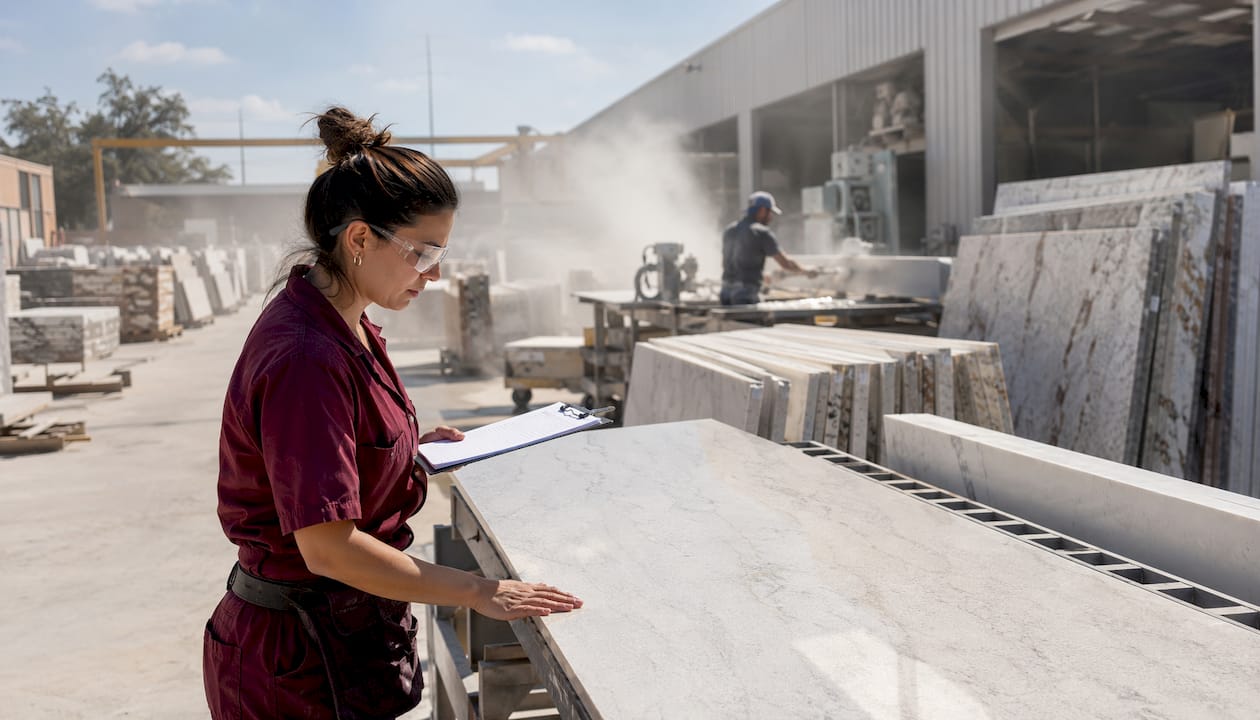
The environmental picture is mixed for both. Quarrying granite disturbs natural landscapes and requires significant energy to transport heavy slabs. Quartz manufacturing uses some recycled materials and produces a more consistent yield, but the resin binders are not biodegradable. Neither material is a clear winner on sustainability, though granite’s natural origin gives it an edge in some green-building assessments.
How durable are quartz and granite over time?
Both materials are built to last decades. Quartz rates 7 on the Mohs hardness scale, while granite falls between 6 and 6.5, giving quartz a slight edge in scratch resistance during normal kitchen use. In practice, neither surface will scratch from everyday cooking activity.
The bigger durability difference is porosity. Granite is a porous stone, meaning liquids can penetrate the surface and cause staining if it isn’t properly sealed. Sealing every 1–3 years is standard practice. Quartz, because of its resin content, has no pores and needs no sealing at all.
Here’s a side-by-side maintenance comparison:
- Quartz: wipe with warm water and mild soap; no sealing schedule; avoid bleach and harsh chemicals; use trivets for hot items
- Granite: wipe with warm water and mild soap; reseal every 1–3 years; avoid acidic cleaners like vinegar; use trivets as a good habit
- Both: chip-resistant but not chip-proof at unsupported edges; professional polishing available if needed
- Lifespan: quartz lasts 25–50+ years; granite can last 50–100+ years with proper care
For granite-specific upkeep, Trussell’s Transformations has published granite maintenance tips worth bookmarking before your installation.
What do quartz and granite look like in your kitchen?
Granite’s appeal is its individuality. Every slab carries a unique combination of mineral grains, veining, and color variation that no manufactured product can fully replicate. Granite’s natural variation is exactly what draws homeowners who want a countertop that feels alive and organic. Dark granite varieties like Absolute Black remain popular in luxury kitchens precisely because their depth and character are impossible to fake.
Quartz takes the opposite approach. Because it’s engineered, manufacturers can control color, pattern, and finish with precision. You can find quartz that mimics marble, concrete, or even granite itself, but with consistent veining that repeats across the slab. That predictability is a genuine advantage when you’re matching countertops to specific cabinetry or tile.
- Granite: unique per slab, organic veining, wide natural color range, works beautifully in traditional and transitional kitchens
- Quartz: uniform patterns, available in hundreds of colors, suits contemporary and modern design styles
- Edge profiles: both materials accept custom edge profiles including eased, beveled, ogee, and waterfall styles
- Finish options: both come in polished, honed, and leathered finishes depending on the fabricator
“Once you know what you’re looking for, it can be easy to differentiate between granite’s unpredictable swirls and quartz’s more uniform appearance.” — HowStuffWorks
Pro Tip: If you’re torn between the two aesthetically, visit a stone yard and view full slabs in person rather than relying on small samples. The pattern scale on a 3cm slab looks completely different from a 4-inch tile chip.
Quartz holds 51% of the U.S. countertop market share versus granite’s approximately 24% in 2026, reflecting how strongly homeowners have moved toward engineered stone for its design consistency and low upkeep.
Heat resistance, stain resistance, and everyday use
This is where the two materials diverge most sharply. Granite is virtually heat-proof and handles direct contact with hot pots and pans without damage. If you bake regularly or move heavy cookware straight from the stove, granite’s tolerance for thermal shock is a real practical advantage.
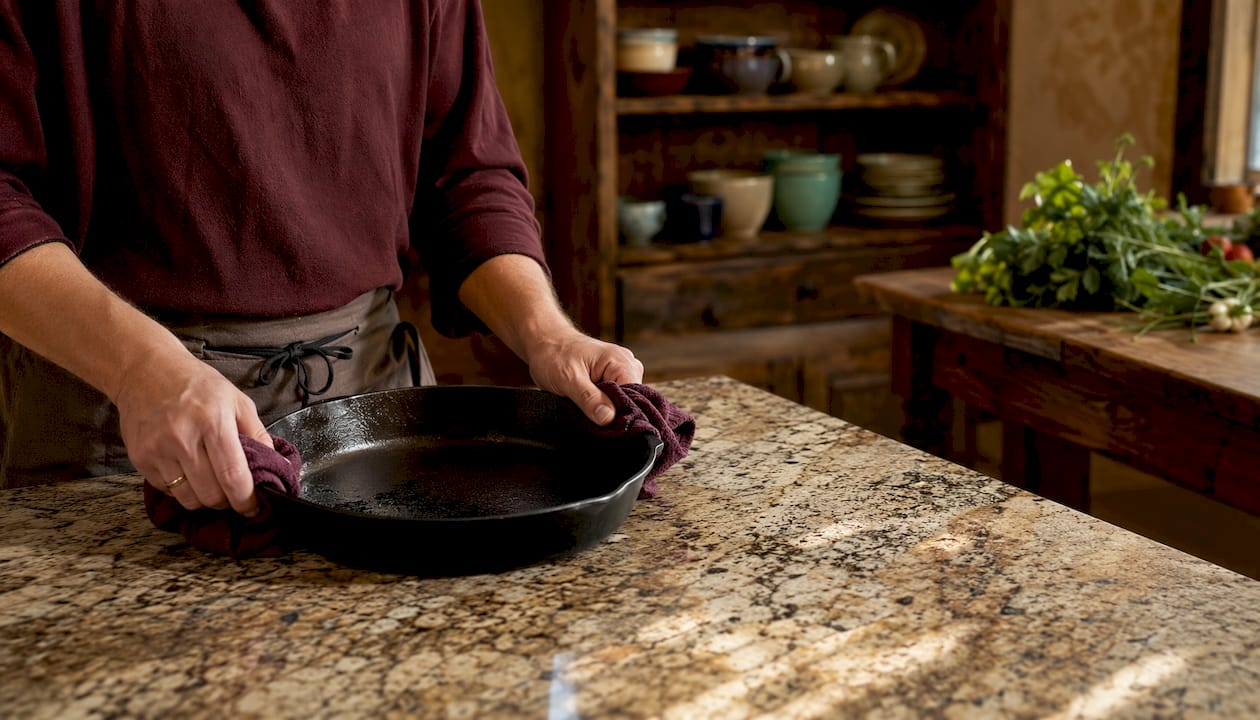
Quartz is a different situation. The resin binders that make it non-porous are also its vulnerability. Quartz can crack or discolor when exposed to temperatures above roughly 300–400°F. A hot skillet placed directly on quartz can leave a permanent white mark or cause the resin to crack. Trivets aren’t optional with quartz. They’re necessary.
Cleaning protocols matter too, especially for quartz. Harsh chemicals and bleach-containing wipes can dull the resin finish over time, causing a haze that doesn’t buff out. Mild soap and water handle daily cleaning on both surfaces. For disinfecting, isopropyl alcohol spray works on both without causing damage.
Everyday use do’s and don’ts:
- Do use trivets on quartz; trivets are good practice on granite too
- Do wipe spills promptly on granite, especially wine, oil, and acidic liquids
- Don’t use Clorox wipes or bleach-based cleaners on quartz
- Don’t use vinegar or acidic cleaners on granite; they degrade the sealant
- Don’t cut directly on either surface; it won’t scratch the stone, but it will ruin your knife blades
Cost and long-term value of each material
Budget-level granite starts lower than entry-level quartz. Level 1 granite runs $40/sq ft installed versus $50/sq ft for entry-level quartz. At the mid-range, prices converge, and for a typical 40 sq ft kitchen the total cost difference between comparable grades is usually under $500. Exotic granite varieties at the premium end can exceed even high-end quartz pricing.
Long-term costs tip toward quartz. No sealing means no annual maintenance expense and no risk of a stain from a missed application. Granite sealing typically runs $75–$200 per service when done professionally, and that adds up over a decade.
Long-term value considerations:
- Quartz: lower ongoing maintenance cost; no sealing; consistent appearance over time
- Granite: lower entry price at budget level; longer theoretical lifespan; may command premium appeal in luxury markets
- Both: resale value impact is rated high for both materials; stone countertops consistently appeal to buyers
- Installation cost factors: granite’s weight and natural variation require more careful fabrication; quartz’s engineered consistency makes fabrication more predictable
Which lifestyle fits quartz, and which fits granite?
Your daily routine is the clearest guide here. Heavy cooks who move cast iron and Dutch ovens straight from the oven to the counter will appreciate granite’s heat tolerance. Bakers especially benefit from granite’s naturally cool surface, which is ideal for working with pastry dough.
Households with young kids, pets, or high kitchen traffic tend to prefer quartz. No sealing schedule, easy cleanup, and a non-porous surface that resists bacterial growth make it a practical choice for busy families. If someone in your home has chemical sensitivities, quartz’s simpler cleaning routine (soap and water only) reduces exposure to specialty stone cleaners and sealants.
Lifestyle match guide:
- Choose granite if: you cook heavily, use hot cookware often, want a unique natural look, or plan an outdoor kitchen
- Choose quartz if: you want minimal upkeep, prefer a consistent modern aesthetic, have a busy household, or prioritize stain resistance
- Outdoor use: granite handles UV exposure well; quartz resins yellow outdoors and are not recommended for exterior installations
Pro Tip: Not sure which material fits your kitchen workflow? Trussell’s Transformations offers personalized countertop consultations to help you match material to lifestyle before you commit.
Local quartz and granite countertop services in Albuquerque
New Mexico homeowners have access to several experienced local fabricators and installers. Working with a local provider matters because they understand regional design preferences, can source slabs from regional distributors, and stand behind their work with local accountability.
Trussell’s Transformations has served Albuquerque for over 25 years, offering both quartz and granite countertop installation alongside full kitchen and bathroom remodels. Financing options are available, and you can choose professional installation or purchase materials for a DIY project. Their Albuquerque countertop services include custom fabrication and a range of styles across budget levels.
Other reputable local providers include:
- Granite Connection: BBB Accredited, Stone Fabricators Alliance member, offering design, fabrication, installation, repairs, and a virtual countertop design tool
- Sandia Marble: Licensed, Bonded and Insured New Mexico contractor with an A+ BBB rating, Home Builders Association member, offering full kitchen and bathroom remodeling with stone countertop fabrication
- M & R Marble and Granite: Albuquerque specialist in quartz, granite, marble, and quartzite with stone care services including cleaning, sealing, and restoration
- Padilla Granite: Family-owned, 25 years of experience, Dekton-Certified Fabricator, specializing in custom quartz and granite countertops and cabinetry
- United Stoneworks: Award-winning full-service countertop design and installation serving New Mexico since 2008
How countertop choice affects your home’s resale value
Stone countertops consistently rank among the upgrades buyers notice and value. Both quartz and granite carry a high resale value rating, and either material signals quality craftsmanship to prospective buyers. The choice between them matters less than the quality of the installation and the condition of the surface at time of sale.
Granite can carry a premium perception in luxury markets, particularly distinctive slabs with dramatic veining. Quartz appeals to buyers who prioritize low-maintenance living, which is an increasingly common preference. A well-maintained quartz surface in a contemporary kitchen can be just as compelling to buyers as a striking granite slab in a traditional one.
What to expect from the installation process
Both materials are heavy. A 3cm slab of either quartz or granite weighs approximately 18–20 pounds per square foot, so both require a two- to three-person crew and sturdy cabinetry. Standard kitchen cabinets handle the weight without structural modification in most cases.
Granite installation requires more careful handling because natural stone has internal grain structures and occasional fissures that can create weak points during cutting and transport. Fabricators need to assess each slab individually. Quartz, being engineered to uniform density, produces more predictable results during fabrication and typically takes less time to cut and polish. Seams on both materials are visible under close inspection; quartz’s consistent pattern can make seams slightly more noticeable, while granite’s natural variation often helps disguise them.
Ready to bring your kitchen or bathroom vision to life? Trussell’s Transformations specializes in modern kitchen and bathroom remodels across Albuquerque and the surrounding New Mexico area. With over 25 years of skilled craftsmanship, financing options, and both DIY and professional installation available, we make the process straightforward from first consultation to final install.
Key Takeaways
Quartz wins on maintenance and stain resistance; granite wins on heat tolerance and natural character. Your lifestyle determines which advantage matters more.
| Point | Details |
|---|---|
| Heat tolerance gap | Granite handles direct heat from cookware; quartz resins can crack above 300–400°F, so trivets are required. |
| Maintenance difference | Quartz needs no sealing; granite requires resealing every 1–3 years at a cost of $75–$200 per service. |
| Cost overlap | Installed prices overlap significantly: $50–$150/sq ft for quartz versus $40–$175/sq ft for granite. |
| Resale value | Both materials carry a high resale value rating; installation quality and surface condition matter most to buyers. |
| Lifestyle fit | Heavy cooks and natural-stone lovers favor granite; busy households wanting minimal upkeep favor quartz. |
Recent Comments