

For most New Mexico homeowners, the choice between a HELOC vs home improvement loan comes down to three things: how much equity you have, how defined your project scope is, and how quickly you need the money. A home equity line of credit (HELOC) works like a revolving credit line secured by your home, with variable interest rates tied to the prime rate. A home equity loan delivers a lump sum at a fixed rate, with payments starting immediately. An unsecured home improvement loan skips the collateral entirely, funds faster, but carries higher rates. Here is a quick comparison:
| Loan Type | Rate Type | Payment Structure | Collateral | Tax Deductible | Best For |
|---|---|---|---|---|---|
| HELOC | Variable | Interest-only during draw, then principal + interest | Yes (home) | Yes, if used for home improvement | Phased, multi-stage projects |
| Home equity loan | Fixed | Fixed monthly from day one | Yes (home) | Yes, if used for home improvement | Single-phase, defined-budget projects |
| Home improvement loan | Fixed | Fixed monthly from day one | No | No | Smaller, fast-turnaround projects |
Quick pros and cons at a glance:
- HELOC: Flexible draws, lower rates, but variable payments and foreclosure risk
- Home equity loan: Predictable payments, lower rates, but interest accrues on the full amount immediately
- Home improvement loan: Fast funding, no collateral risk, but rates from 8%–35.99% depending on credit
What is a home equity line of credit (HELOC)?
A HELOC is an open-end revolving credit line secured by your home’s equity, and it functions much like a credit card with a much lower interest rate. You draw funds as needed during the draw period, which typically lasts 5–10 years, and you pay interest only on what you actually borrow. After the draw period closes, you enter repayment, often spanning several years, and monthly payments rise considerably.
Lenders generally cap HELOC borrowing at 85% combined loan-to-value, meaning you need at least 15% equity in your home to qualify. Most lenders also look for a credit score of at least 620 and a debt-to-income ratio below 43%. Because the rate is variable, your monthly payment can shift month to month as the prime rate moves.
Benefits for renovation financing:
- Pay interest only on what you draw, not the full approved amount
- Ideal for phased renovation projects where costs arrive in stages
- Credit line replenishes as you pay it down during the draw period
- Some lenders allow conversion of part of the balance to a fixed rate
Considerations:
- Variable rates can climb, increasing your payment unpredictably
- Your home secures the loan, so missed payments put it at risk
- Closing costs and annual fees may apply
Pro Tip: If your kitchen remodel will unfold over six to twelve months with contractors billing in phases, a HELOC lets you draw only what each phase costs, keeping interest charges lower than a lump-sum loan would.
What is a home equity loan?
A home equity loan gives you one lump sum at a fixed interest rate, with repayment beginning immediately after closing. The rate is locked at closing, so your monthly payment never changes, which makes budgeting straightforward for a project with a firm price tag. Interest accrues on the entire principal from day one, regardless of how quickly you spend the funds.
Like a HELOC, this loan uses your home as collateral, and approval typically takes 2–6 weeks and includes a home appraisal. Fixed rates and predictable payments make it the stronger choice when you know exactly what a project will cost before work begins.
Pros:
- Fixed rate means no payment surprises over the loan term
- Lower rates than unsecured personal loans
- Interest may be tax-deductible when funds go toward improving the home securing the loan
- Terms typically range from mid- to long-term durations
Cons:
- Interest accrues on the full amount from day one, even unspent funds
- Home is at risk if you default
- Longer approval process than unsecured loans
- Less flexible than a HELOC for projects with uncertain costs
What are home improvement loans?
An unsecured home improvement loan is a personal installment loan you repay in fixed monthly payments, with no home equity required. Approval is based on your credit score and income rather than your property value, and funding can arrive within one business day to one week. The tradeoff is cost: rates run from 8% to 35.99%, well above what most home equity products charge.
Because there is no collateral, you do not risk your home if payments become difficult. That said, shorter repayment terms mean higher monthly payments, and loan amounts are generally smaller than what home equity products offer.
Advantages:
- No home equity needed, so renters and newer homeowners can qualify
- Faster funding than home equity options
- No foreclosure risk if you fall behind
Risks:
- Higher interest rates, especially for borrowers with fair credit
- Shorter terms increase monthly payment burden
- Interest is not tax-deductible
Comparing loan options: rates, payments, and approval timelines
The most practical way to choose between these products is to match the loan structure to your project’s cash flow needs.

| Feature | HELOC | Home equity loan | Home improvement loan |
|---|---|---|---|
| Interest rate type | Variable | Fixed | Fixed |
| Payment structure | Interest-only draw period, then full repayment | Fixed monthly from closing | Fixed monthly from funding |
| Typical loan amount | Up to 85% of home equity | Up to 85% of home equity | Generally smaller amounts |
| Approval timeline | 2–6 weeks | 2–6 weeks | Within one week |
| Collateral required | Yes (home) | Yes (home) | No |
| Tax deductible | Yes, if used for home improvement | Yes, if used for home improvement | No |
| Ideal use case | Multi-phase renovations | Single-phase, fixed-budget projects | Small, urgent projects |
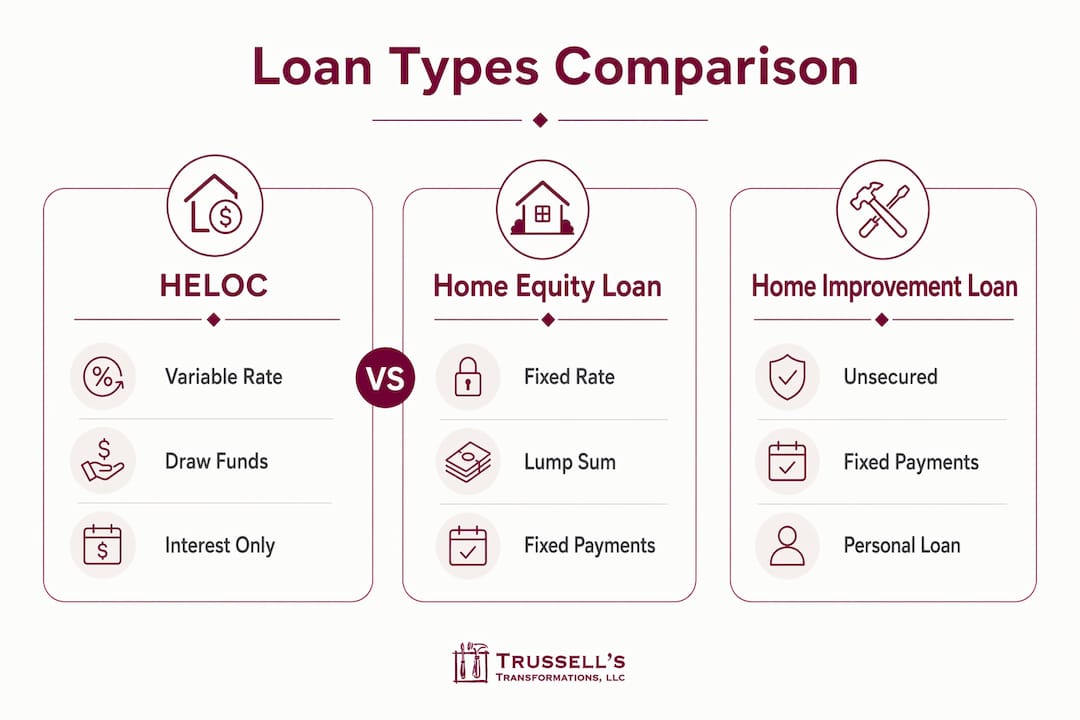
A HELOC’s variable rate is its biggest double-edged quality. When rates are low, you benefit. When the prime rate rises, your draw-period payments climb with it. The CFPB warns that both HELOCs and home equity loans carry foreclosure risk if repayment fails, a reality no homeowner should overlook.
Pro Tip: Match the loan structure to your project timeline. A bathroom gut-and-replace with a fixed contractor bid fits a home equity loan perfectly. A whole-home renovation rolling out over 18 months fits a HELOC.
Choosing local lenders for your New Mexico renovation
New Mexico homeowners have solid local options for home equity and improvement financing. Here are four worth contacting:
- State Employees Credit Union of New Mexico (SECU NM): A community-focused credit union recognized by Newsweek as a Best Credit Union and honored with the 2026 Best of Santa Fe and ABQ Journal Readers’ Choice awards. SECU NM offers home mortgage loans, personal loans, and digital banking, with auto loan rates starting as low as 3.99% for 84 months as a benchmark of their competitive pricing.
- Premier Choice Mortgage: A regional mortgage specialist offering FHA loans, refinancing, reverse mortgages, and daily updated rate quotes. Premier Choice Mortgage provides free rate comparisons, making it easy to benchmark home equity loan options before committing.
- Choice Mortgage Group New Mexico: Another regional lender supporting New Mexico homebuyers with mortgage financing and refinancing products tailored to local market conditions.
- High Desert Home Lending: A locally rooted lender serving Albuquerque homeowners with home loan products and regional expertise in New Mexico’s real estate market.
Trussell’s Transformations works directly with homeowners on kitchen remodels in Albuquerque and bathroom renovations, and financing options are available to help you move forward without delay. With 25+ years of renovation experience, the team understands how financing choices affect project timelines and budgets.
Remember the CFPB’s standing guidance: any loan secured by your home puts that home at risk if repayment becomes impossible. Consult a licensed mortgage professional before committing to a home equity product.
How loan terms and flexibility affect your renovation project
Loan term length directly shapes your monthly payment and total interest cost. Shorter home equity loan terms produce higher monthly payments, while longer terms lower the monthly cost but extend repayment. Flexibility matters just as much as rate when a renovation runs long or costs shift mid-project.
HELOCs offer the most flexibility during construction because you draw only what you need, when you need it. Some lenders allow a fixed-rate conversion on part of the HELOC balance, which can lock in predictability for the repayment phase while keeping the draw period flexible. Home improvement loans, by contrast, give you the full amount upfront and start the repayment clock immediately, which works well for a defined scope but poorly for open-ended work.
Alternatives to HELOCs and home improvement loans
When neither a HELOC nor a home improvement loan fits your situation, two other options are worth considering.
Cash-out refinance: You replace your existing mortgage with a larger one and take the difference in cash. This can make sense when current rates are favorable, but you pay closing costs and restart your mortgage term. If your current rate is lower than today’s market rate, a cash-out refinance likely costs more in the long run.
Personal line of credit: Similar to a HELOC but unsecured, a personal line of credit lets you borrow against your credit profile rather than your home. Credit limits tend to be lower and rates higher than home equity products, but your home is never at risk.
Credit cards: Useful only for very small, urgent purchases. Regular credit card rates run well above any home equity product, so carrying a balance for a renovation is expensive quickly.
How to decide which financing option fits your renovation
Start with your equity position. If you own less than 15% of your home’s value outright, home equity products are likely out of reach, and an unsecured home improvement loan becomes your practical path. If you have sufficient equity, the decision shifts to project scope.
For a single, clearly priced project like a bathroom remodel with a firm contractor quote, a home equity loan’s fixed rate and predictable payment structure fit well. For a multi-phase renovation where costs will arrive in waves, a HELOC’s draw-as-you-go structure keeps interest costs lower. For smaller, time-sensitive upgrades where speed matters more than rate, an unsecured home improvement loan gets money in your account within days.
Your credit score also shapes the math. Borrowers with strong credit qualify for the lower end of home improvement loan rates, narrowing the gap with home equity products. Weaker credit pushes rates toward the higher end of that 8%–35.99% range, making a home equity product significantly cheaper if you have the equity to qualify.
Key Takeaways
A HELOC suits phased renovations, a home equity loan fits fixed-budget projects, and an unsecured home improvement loan works best for smaller, fast-funded needs with no collateral risk.
| Point | Details |
|---|---|
| HELOC best for phased projects | Draw funds in stages and pay interest only on what you use during the draw period. |
| Home equity loan offers fixed payments | Rate locks at closing; interest accrues on the full lump sum from day one. |
| Home improvement loan funds fastest | Approval in days, no collateral required, but rates range from 8% to 35.99%. |
| Tax deductibility has conditions | Interest on home equity products is deductible only when funds improve the home securing the loan. |
| Collateral risk is real | Both HELOCs and home equity loans put your home at risk if repayment fails, per CFPB guidance. |
Ready to bring your renovation vision to life? Trussell’s Transformations has extensive experience serving Albuquerque and surrounding New Mexico communities, delivering kitchen and bathroom remodels with transparent pricing and financing options built for real homeowners. Whether you are planning a full kitchen transformation or a focused bathroom upgrade, the team is ready to help you plan, budget, and build with confidence. Contact Trussell’s Transformations today to discuss your project and explore financing that fits your timeline.
Recent Comments