

Why Custom Bar Tops Are the Heart of Any Great Entertainment Space
Custom bar tops can completely transform how a space looks, feels, and functions — whether you’re finishing a basement home bar or upgrading a commercial restaurant counter. According to architectural standards, the selection of materials and height is critical for both comfort and durability.
Here’s a quick snapshot of what you need to know before diving in:
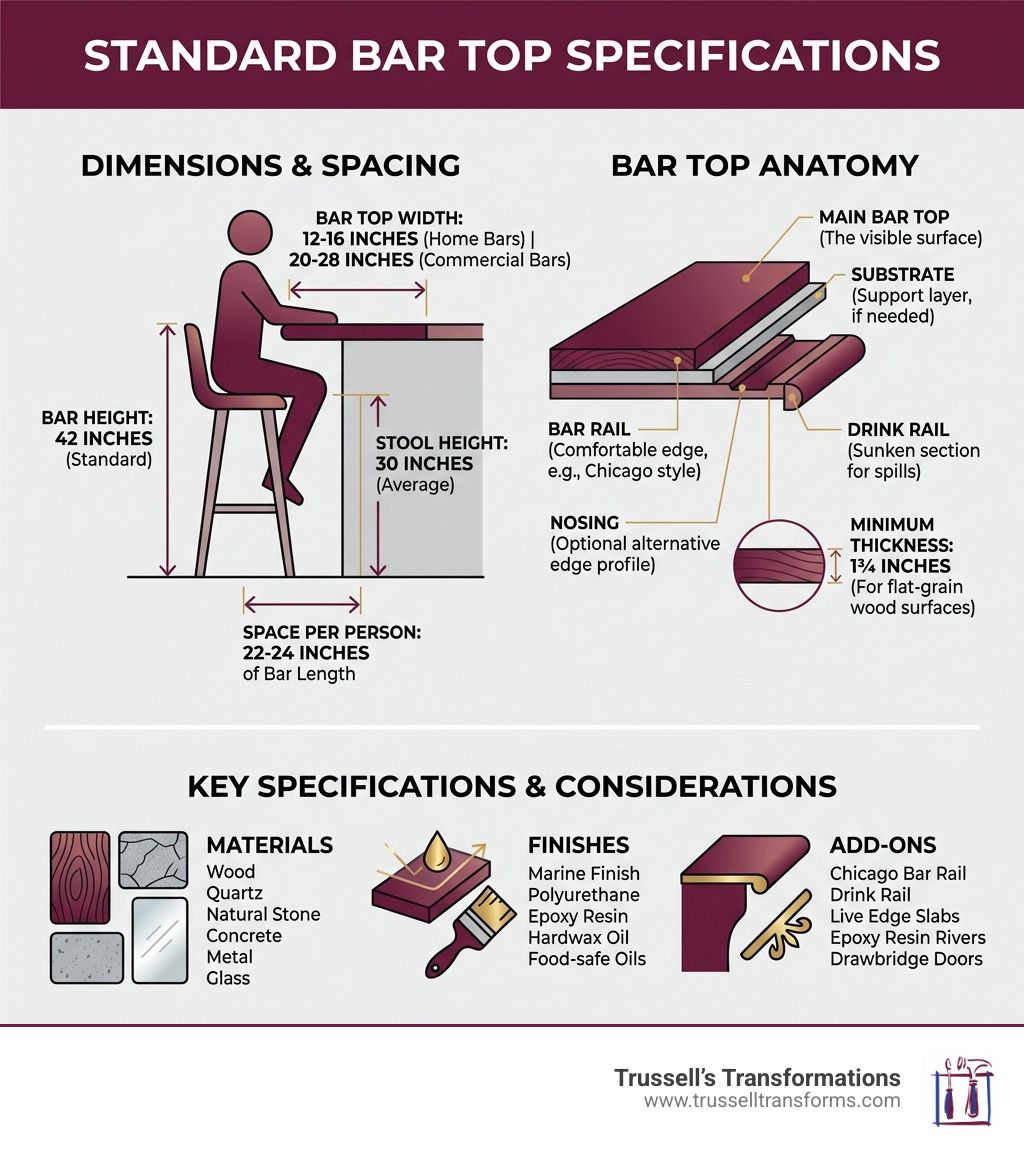
- Materials: Wood (walnut, maple, oak), quartz, natural stone, concrete, metal, and glass are all popular options
- Standard height: 42 inches from floor to bar surface; bar stools average 30 inches tall
- Width: 12–16 inches for home bars; 20–28 inches for commercial bars
- Space per person: Allow 22–24 inches of bar length per seat
- Minimum thickness: 1¾ inches for flat-grain wood surfaces
- Finish options: Marine finish, polyurethane, epoxy resin, hardwax oil, and food-safe oils
- Key add-ons: Chicago bar rail, drink rail, live edge slabs, epoxy resin rivers, drawbridge doors
The surface you choose does a lot of heavy lifting. It has to handle spilled drinks, hot glasses, daily cleaning, and years of use — while still looking great. That’s a tall order for any material.
And it’s not just about durability. A bar top is often the most visible surface in an entertainment space. Homeowners consistently report that a well-chosen bar top becomes a conversation starter — the kind of detail that pulls an entire room together.
Getting it right means understanding materials, dimensions, finishes, and — critically — who installs it. A poorly templated seam or an under-supported slab can undo even the most beautiful design.
This guide walks you through every decision, so your bar top holds up and stands out.
Selecting the Best Materials for Custom Bar Tops
When we talk to homeowners in Albuquerque and Rio Rancho about their dream bar, the first question is always: “What should it be made of?” The material you choose dictates the vibe of the entire room. Are you going for a warm, historic pub feel or a sleek, modern cocktail lounge aesthetic?
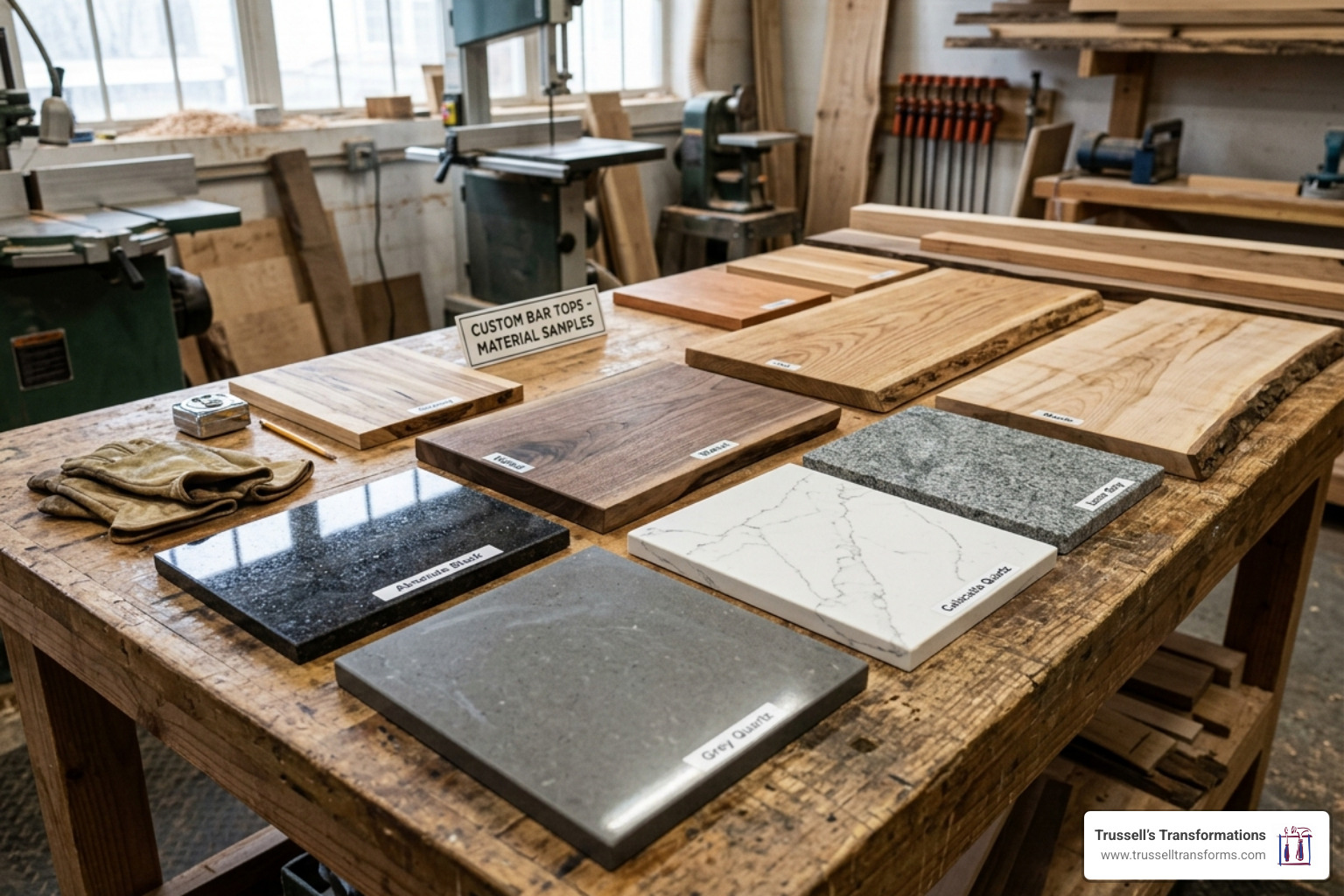
The versatility of custom bar tops means you aren’t stuck with just one look. We often see clients mixing materials—perhaps a stone “working” surface on the server side with a gorgeous wood “patron” surface where guests sit.
Each material brings its own set of pros and cons to the party:
| Feature | Wood | Quartz | Natural Stone (Granite) |
|---|---|---|---|
| Durability | Moderate (can scratch/dent) | Very High | High |
| Pore Structure | Porous (requires sealing) | Non-porous | Porous (requires sealing) |
| Heat Resistance | Low | Moderate | High |
| Maintenance | Regular oiling or permanent finish | Low (Soap and water) | Annual sealing |
| Aesthetic | Warm, natural, classic | Modern, consistent | Unique, earthy, luxury |
Hardwood Species and Live Edge Aesthetics for Custom Bar Tops
For many, a bar isn’t a bar unless it’s wood. Wood offers a tactile warmth that stone just can’t replicate. When selecting wood for custom bar tops, the species matters for both looks and longevity.
- Black Walnut: The gold standard for luxury bars. It’s dark, rich, and naturally sophisticated.
- Hard Maple: Incredibly dense and light in color. It’s a favorite for “butcher block” styles because it can take a beating.
- Cherry: Known for its smooth grain and the way it darkens beautifully over time.
- White Oak: Very trendy right now, especially in “rift sawn” cuts that offer a clean, linear look.
- Reclaimed Timber: Perfect for that rustic, industrial New Mexico look. It adds instant history to a new build.
If you want a true showstopper, consider a live edge slab. This preserves the natural contour of the tree, including knots and cracks. To make these surfaces functional, we often use epoxy resin rivers. This fills the natural voids with a glass-hard, waterproof material (often in colors like deep blue or smoky black) while keeping the organic edge of the wood visible. Just ensure your wood is kiln-dried; otherwise, the dry New Mexico air will cause it to warp or crack once it’s inside your home.
The Durability of Quartz and Natural Stone
While wood is classic, many Albuquerque homeowners prefer the “set it and forget it” nature of stone. If you’re planning on hosting rowdy game days or messy cocktail parties, stone is your best friend.
We carry premium brands like Caesarstone, Cambria, and Silestone, which offer engineered quartz surfaces. 3 advantages of quartz countertops include their non-porous nature (they won’t soak up red wine or lime juice), their extreme scratch resistance, and the fact that they never need to be sealed.
If you prefer the work of Mother Nature, the benefits of a granite countertop are hard to beat. Each slab from The Stone Collection is a one-of-a-kind piece of art. For a bar, we often recommend leathered finishes. This process gives the stone a slightly textured, matte feel that is excellent at hiding fingerprints and water spots compared to a high-gloss polished finish. Honed textures are another great matte option that provides a softer, more contemporary look.
Essential Design Dimensions and Specifications
A beautiful bar that is uncomfortable to sit at is a failure. Ergonomics play a massive role in custom bar tops. If the overhang is too short, your knees hit the cabinets. If it’s too high, you feel like a child at the dinner table.
Standard Sizing for Residential vs. Commercial Custom Bar Tops
Whether we are installing in a home in Sandia Heights or a commercial space in downtown Albuquerque, we follow strict professional guidelines:
- Height: The standard bar height is 42 inches from the floor. This accommodates a standard 30-inch bar stool comfortably.
- Width: Home bars are typically leaner, ranging from 12 to 16 inches. Commercial bars need more “real estate” for glassware and service, usually measuring 20 to 28 inches wide.
- The Overhang: You need 6 to 12 inches of overhang on the patron side so guests have room for their legs.
- Personal Space: Allow 22 to 24 inches of width per person. If you have an 8-foot bar, you can comfortably fit four people.
- Thickness: For a wood bar to feel substantial and resist warping, a 1 3/4-inch minimum thickness is recommended.
- Accessibility: In commercial settings (and many forward-thinking residential ones), including a 30-inch high section for ADA-compliant wheelchair accessibility is a must.
Don’t forget the edges! Countertop edge profiles aren’t just for looks. A “waterfall” edge, where the material continues down the side to the floor, is a high-end modern trend. For a traditional pub feel, nothing beats the Chicago bar rail. This is a heavy, contoured perimeter piece that gives patrons a place to rest their arms and prevents spilled drinks from running off the edge onto their laps.
Professional Finishing and Custom Features
The finish is what stands between your investment and a permanent ring from a sweaty beer bottle. For wood custom bar tops, we don’t just use standard hardware store varnish.
In high-use environments, a Marine Finish is the gold standard. It’s permanent, waterproof, and stain-proof—originally designed for the decks of boats, so it can certainly handle a spilled Margarita. Another high-end option is a Polarion topcoat, an automotive-grade finish that offers incredible scratch resistance while maintaining a natural wood sheen.
If you prefer a more natural feel, hardwax oils or food-safe oils (like mineral oil) are great for butcher blocks where you might be cutting citrus for garnishes. However, these require more frequent maintenance.
Beyond the finish, consider these custom features:
- Drink Rails: A shallow (3/4-inch deep) stainless steel or wood trough on the server side to catch spills.
- Drawbridge Doors: A hinged section of the bar top that allows the bartender to enter or exit without crawling under the counter.
- Integrated Sinks: Sinks that are under-mounted or seamlessly integrated into the surface for easy cleanup.
Even the toughest stone needs love. Following 5 tips to maintain granite countertops, such as using trivets for heat and sealing the stone annually, will keep your bar looking brand new for decades.
Why Professional Installation Outperforms DIY
We know the “DIY” itch is strong, especially with so many YouTube tutorials out there. But when it comes to custom bar tops, the “Oops” factor can be incredibly expensive.
At Trussell’s Transformations, we’ve seen what happens when a DIY bar project goes south. Stone slabs can weigh hundreds of pounds; one wrong move and you’ve cracked a $3,000 piece of quartz—or worse, injured yourself.
Choosing new countertops involves more than just picking a color. It requires:
- Precision Templating: We use digital tools to ensure the fit is perfect against your walls, even if they aren’t perfectly square (and in Albuquerque, they rarely are!).
- Structural Support: A heavy stone overhang requires invisible steel supports or reinforced cabinetry. Without this, the slab can snap or tip the entire bar over.
- Seamless Joints: Making two pieces of stone or wood meet invisibly is an art form.
When you upgrade your space with professional installation, you aren’t just paying for labor; you’re paying for accountability. Our licensed contractors ensure every seam is tight, every edge is level, and the structural integrity is guaranteed. Plus, professional installation often protects your material warranties, which can be voided by improper DIY handling.
Frequently Asked Questions about Custom Bar Tops
What is the best wood for a high-traffic bar?
For commercial or high-traffic residential bars, Hard Maple and Red Oak are excellent choices due to their density. However, Black Walnut remains the most popular for its balance of durability and high-end aesthetics.
How do I prevent water damage on a wood bar top?
The secret is in the sealant. A permanent Marine Finish or a high-quality polyurethane creates an impermeable barrier. If you use oil finishes, you must re-apply them regularly (every few months) to keep the wood fibers from absorbing moisture.
What is the standard overhang for bar stools?
For a standard 42-inch high bar, you should aim for a 10 to 12-inch overhang. This provides enough “knee room” for guests to sit comfortably without leaning forward too far.
Conclusion
A custom bar is more than just a place to set a drink; it’s the anchor of your home’s social life. Whether you choose the organic beauty of a live edge walnut slab or the indestructible luxury of a Cambria quartz surface, the right custom bar tops will serve your family for generations.
At Trussell’s Transformations, we’ve spent over 25 years helping Albuquerque and Rio Rancho homeowners turn their renovation dreams into reality. Our 8023 Edith Blvd NE showroom is packed with samples from the best in the business—from Durasupreme Cabinetry and Waypoint Living Spaces to Sollid Cabinetry and Kitchen Cabinet Distributors.
We handle everything from the initial design to the final licensed installation, and we even offer 0% financing to help get your project off the ground. Don’t settle for a “flat” entertainment space. Start your custom bar project today and let us build you a surface worth celebrating.
Recent Comments