

Why Albuquerque Homeowners Are Switching to Metal Roofing
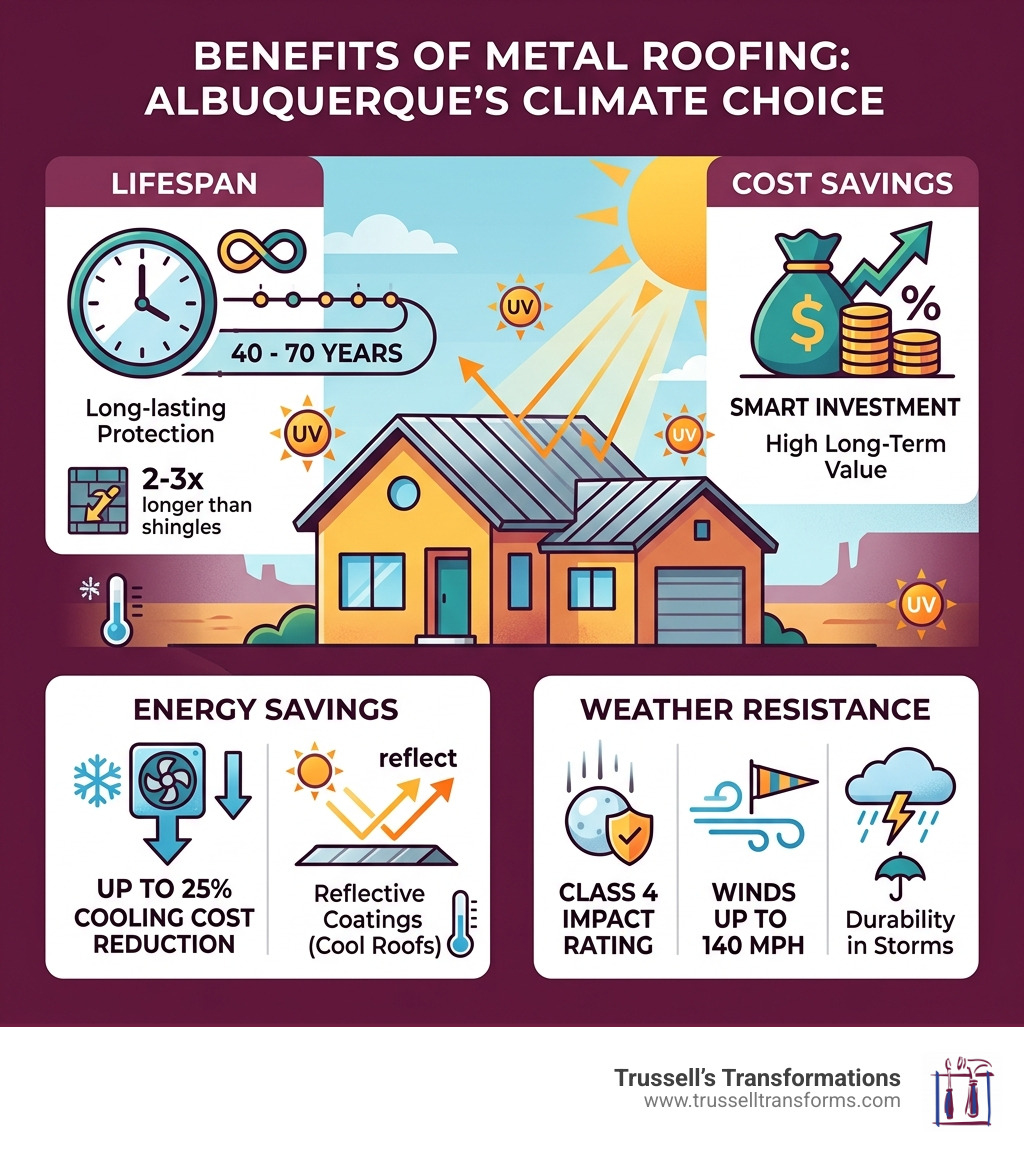
Metal roofing installation Albuquerque homeowners are choosing is one of the smartest long-term investments you can make in this climate. Here’s a quick snapshot of what you need to know:
- Lifespan: 40-70 years — 2-3x longer than asphalt shingles
- Cost range: $12,000–$22,000 fully installed for a 1,500–2,000 sq ft home (standing seam)
- Energy savings: Up to 25% reduction in cooling costs thanks to solar-reflective coatings
- Weather resistance: Class 4 impact rating (highest available), rated for winds up to 140 mph
- Best gauges for Albuquerque: 24 or 26 gauge steel for residential; 26 gauge minimum for commercial
- Eco-friendly: Made from up to 60% recycled material and fully recyclable
Albuquerque’s climate is brutal on roofs. Summer temperatures routinely exceed 95°F. UV radiation is intense year-round. Then come the monsoons — sudden, heavy downpours that test every seam and fastener. And hailstorms? They’re common enough that impact resistance isn’t a bonus feature here — it’s a requirement.
Traditional asphalt shingles typically last 15–25 years in these conditions. Metal roofing simply outlasts them, often by decades.
But the material is only part of the equation. How a metal roof is installed — the gauge of the panels, the fastening system, the underlayment, the flashing — determines whether it performs for 40 years or fails in 10. That’s why choosing a licensed, experienced contractor matters as much as choosing the right panels.
This guide walks you through everything: panel types, gauges, installation steps, costs, and what to look for in a contractor in the Albuquerque area.
Why Metal Roofing is the Superior Choice for New Mexico Homes
When we talk about roofing in the High Desert, we aren’t just talking about keeping the rain out. We are talking about a thermal shield. In Albuquerque, the sun is your roof’s greatest enemy. Traditional dark asphalt shingles absorb solar radiation, transferring that heat directly into your attic and living spaces.
Metal roofing, however, acts as a reflective barrier. By using “cool roof” coatings—many of which are Energy Star certified—these systems reflect a significant portion of solar energy back into the atmosphere. This can reduce your cooling costs by 10% to 25%—and in some cases up to 40%—compared to dark shingles. This is a game-changer during those scorching July afternoons in the Rio Grande Valley.
Beyond the heat, we have to consider our “fifth season”: monsoon season. Metal roofs are non-combustible (carrying a Class A fire rating) and offer incredible wind resistance. Properly installed standing-seam systems are rated for winds up to 140 mph, which is more than enough to handle the gusts that whip through the Sandia foothills. Furthermore, most metal products carry a Class 4 impact rating. While a massive hailstorm might cause cosmetic “dimples” on softer metals, the structural integrity and waterproofing of the roof remain intact, whereas shingles would likely crack or lose their protective granules.
If you are weighing your options, it is helpful to look at how metal stacks up against other local favorites like tile or TPO. You can learn more about choosing the best roofing material for your Albuquerque home to see which fits your specific neighborhood’s aesthetic and your budget.
Selecting the Best Panels: Gauges, Styles, and Performance
Not all metal roofs are created equal. When planning a metal roofing installation Albuquerque project, you’ll encounter various “gauges” and “styles.” According to industry resources like the Metal Roofing Alliance, selecting the correct gauge for your specific regional weather patterns is vital for long-term performance.
Standing Seam vs. Exposed Fastener Systems
This is the most critical choice you will make regarding the “system” of your roof.
| Feature | Standing Seam | Exposed Fastener (Ag Panel/Ribbed) |
|---|---|---|
| Fasteners | Hidden/Concealed | Visible screws with rubber washers |
| Waterproofing | Superior (no holes in the pans) | Good (requires maintenance of washers) |
| Thermal Expansion | Excellent (panels “float”) | Limited (screws can “wallow” out holes) |
| Cost | Higher upfront investment | More budget-friendly |
| Aesthetics | Sleek, modern, or “contemporary country” | Traditional “pro-panel” or industrial look |
Standing Seam is often considered the “gold standard.” The panels interlock at raised seams (usually 1 to 1.5 inches high), and the fasteners are hidden underneath. This means there are no holes drilled through the metal where water can enter. It also allows the metal to expand and contract freely as temperatures swing from 30°F at night to 90°F during the day—a common occurrence in New Mexico.
Exposed Fastener systems (like PBR or Desert Rib panels) are more affordable and very common in agricultural or industrial settings, though many Albuquerque homeowners love the “rustic” look for residential styles. The main trade-off is that these panels are screwed directly through the face of the metal. Over 20 years, those rubber washers can degrade under the intense New Mexico sun, requiring a “re-screw” maintenance job to keep the roof watertight.
Recommended Gauges for Metal Roofing Installation in Albuquerque Weather
For residential homes in Albuquerque, we generally recommend 24-gauge or 26-gauge steel.
- 24-Gauge: This is the premium choice. It is thicker, more rigid, and offers the best resistance to oil-canning (the wavy appearance metal can sometimes get) and hail dents.
- 26-Gauge: This is the industry standard for high-quality residential and commercial work. It provides excellent structural integrity and wind uplift resistance.
- 29-Gauge: While often used for barns or sheds, we find this a bit thin for the primary residence in a climate with our wind and hail potential.
Choosing a thicker gauge ensures your roof doesn’t just look good on day one, but remains flat and functional for the next half-century.
The Step-by-Step Process: Metal Roofing Installation in Albuquerque
A successful installation is a symphony of precision. At Trussell’s Transformations, we believe the “hidden” parts of the roof are just as important as the shiny metal on top. This is why hiring a licensed, bonded, and insured contractor is essential; the accountability provided by a professional team ensures your investment is protected by expert craftsmanship and valid warranties.
Preparation and Underlayment
The process begins with a thorough inspection of the roof deck. If we are replacing an old roof, we typically recommend removing the old shingles. While it is possible to install metal over shingles (more on that in the FAQ), a full tear-off allows us to inspect the wooden sheathing for rot or soft spots.
Once the deck is clean and repaired, we apply a high-quality synthetic underlayment. Gone are the days of simple felt paper; synthetic underlayment acts as a secondary moisture barrier and provides superior tear resistance. We also install a drip edge around the perimeter to direct water away from your fascia and into your gutters.
Precision Techniques for Metal Roofing Installation in Albuquerque
When the panels arrive, the real skill begins.
- Alignment: We use chalk lines to ensure the first panel is perfectly square. If the first panel is off by even a fraction of an inch, the error will “grow” across the roof, leaving the final panels crooked.
- Fastening: For standing seam, we use clips that allow for thermal movement. For exposed fasteners, we use specialized screws with EPDM washers, being careful not to over-tighten (which crushes the washer) or under-tighten (which leaves a gap).
- Flashing and Sealants: This is where most DIY jobs fail. We custom-bend flashing for chimneys, vents, and valleys. We use high-grade butyl tapes and sealants designed to withstand UV degradation.
- Ridge Caps: The final step is the ridge cap, which allows for proper ventilation while keeping out the dust and rain.
For more details on how we handle these technical aspects, you can explore our roofing services or browse our roofing category blog for deeper dives into specific materials.
Elevating Your Home: From Durable Roofs to Designer Kitchens
At Trussell’s Transformations, we don’t just stop at the roofline. We understand that a home is a complete ecosystem. Many of our clients who invest in a lifetime metal roof also want to bring that same level of quality and durability to their interiors. Hiring a single, licensed contractor for both exterior and interior work provides a level of accountability and seamless project management that DIY or multi-vendor approaches simply can’t match.
We are a true “one-stop shop.” While our roofing teams are securing your exterior against the New Mexico elements, our design team can help you transform your kitchen or bathroom. Our Albuquerque showroom features world-class brands that match the longevity of a metal roof.
If you are looking for cabinetry that stands the test of time, we carry:
- Durasupreme Cabinetry: For custom, high-end finishes.
- Waypoint Living Spaces: Combining style with practical durability.
- Sollid Cabinetry & Kitchen Cabinet Distributors: Excellent options for those seeking quality and value.
To top off those cabinets, we offer the “Stone Collection,” featuring industry-leading quartz and stone surfaces like Caesarstone, Cambria, and Silestone. Just as a metal roof protects your home from the outside, these non-porous, scratch-resistant surfaces protect your kitchen from the daily wear and tear of a busy life.
Whether you are preparing for the seasons—perhaps checking out our tips on holiday roof care and home safety—or planning a total interior overhaul, we provide a seamless, accountable experience.
Frequently Asked Questions about Metal Roofing
Can you install a metal roof over existing shingles in Albuquerque?
Yes, it is often possible and can save on labor and disposal costs. However, local building codes usually limit the number of roof layers allowed. The shingles must be in relatively good condition (no major curling or rot), and we typically install “1×4” wood furring strips over the shingles to create a flat surface for the metal. That said, we usually recommend a full tear-off to ensure the structural integrity of the wood underneath.
How much does metal roof installation cost in Albuquerque, NM?
For a typical 1,500 to 2,000 square foot home, a standing-seam metal roof usually costs between $12,000 and $22,000 fully installed. An exposed-fastener system is more affordable, typically ranging from $8,000 to $14,000. While this is higher than the $6,500–$8,000 you might pay for asphalt shingles, the metal roof lasts three times longer, making it the cheaper option on a “per year” basis.
How long does a professionally installed metal roof last in New Mexico?
In our dry, sunny environment, a professionally installed metal roof can easily last 40 to 70 years. Because metal doesn’t “dry out” or lose granules like asphalt, and it isn’t susceptible to the rot that can plague wood or the cracking that can affect tile, it is often the last roof you will ever need to buy.
Conclusion
A metal roofing installation Albuquerque project is more than just a home improvement; it’s a commitment to quality and long-term peace of mind. In a city where the weather can swing from a calm morning to a 60-mph windstorm by sunset, you need a roof that doesn’t just “get by”—you need one that excels.
At Trussell’s Transformations, we bring over 25 years of experience to every project. As a licensed, bonded, and insured contractor, we take accountability for every screw and every seam. We aren’t just here to sell you a roof; we are here to build a relationship based on trust and superior craftsmanship. With 0% financing options available, we make it easier than ever to invest in the “forever roof” your home deserves.
Ready to start your transformation? Visit us at our Albuquerque location at 8023 Edith Blvd NE, or check out more info about our cabinet and home services to see how we can help you from the roof down to the floorboards. Let’s build something that lasts.
Recent Comments