

What You Need to Know About TPO Roofing Membrane Installation
TPO roofing membrane installation is the process of applying a single-ply, heat-weldable thermoplastic polyolefin sheet to a flat or low-slope roof to protect against UV rays, water intrusion, and extreme weather.
Here’s what a standard TPO installation involves:
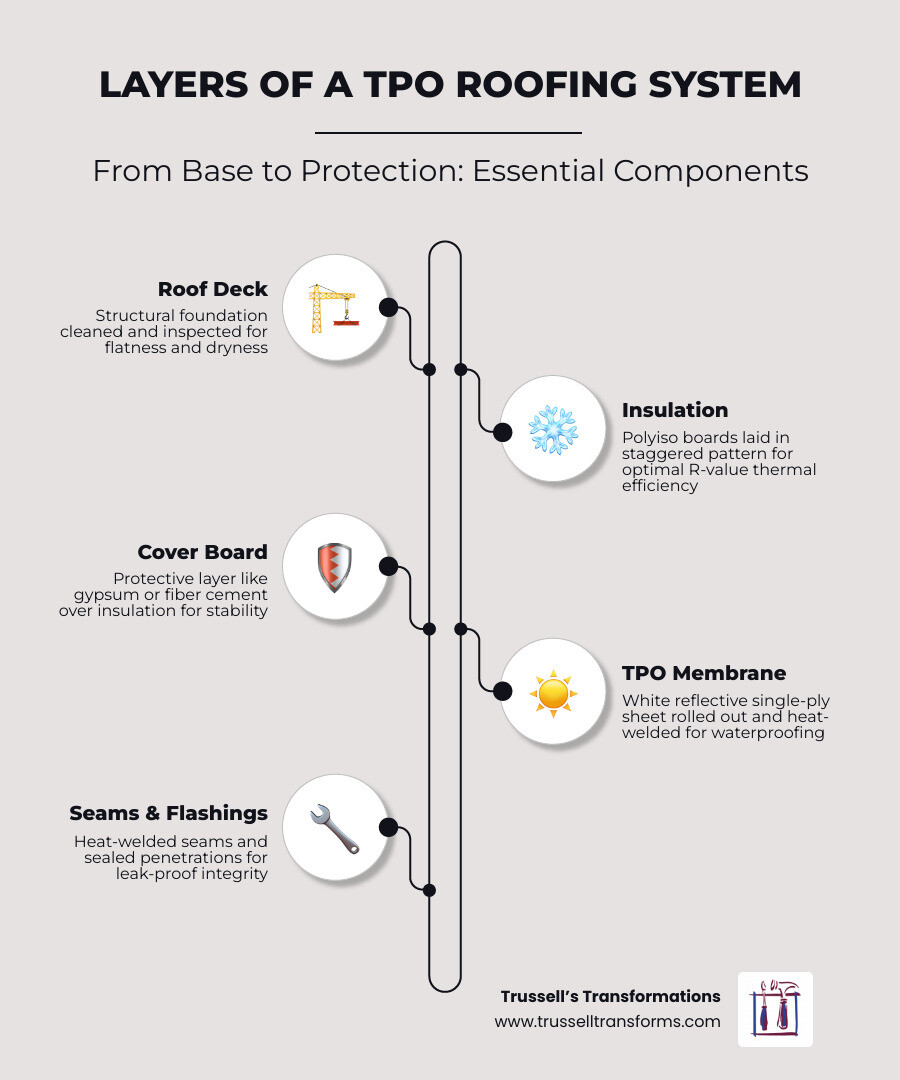
- Inspect and prepare the roof deck – clean, dry, and structurally sound
- Install insulation boards in a staggered pattern for thermal efficiency
- Roll out the TPO membrane and let it relax for 30 minutes to reduce wrinkles
- Secure the membrane using mechanical fasteners, bonding adhesive, or induction welding
- Heat-weld all seams with a hot-air welder for a watertight bond
- Flash all penetrations – pipes, drains, vents, and parapet walls
- Inspect every seam and flashing with a probe tool before calling it done
TPO has become one of the fastest-growing single-ply roofing systems in commercial construction – and for good reason. It’s durable, energy-efficient, and cost-effective. But how well it performs over the next 20-30 years depends almost entirely on how well it’s installed.
That’s not a small detail. Poor seam welds, skipped prep steps, or wrong fastener patterns can turn a great material into an expensive problem.
This guide breaks down exactly what professional TPO installation looks like – and why getting it right the first time is the only approach worth taking.
The Science of TPO: Properties and Benefits
At its core, TPO (Thermoplastic Polyolefin) is a blend of polypropylene and ethylene-propylene rubber. This specific chemistry provides a “best of both worlds” scenario: the heat-weldable nature of PVC combined with the low-maintenance durability of EPDM.
One of the standout features of TPO is its high reflectivity. In the intense sun of Albuquerque and Rio Rancho, a white TPO membrane acts like a mirror, bouncing UV rays and solar heat away from the building. This energy efficiency isn’t just a buzzword; it significantly reduces cooling loads, keeping your interior temperatures stable while lowering utility bills.
But the real magic happens at the seams. Unlike other roofing materials that rely on tapes or glues—which can degrade over time—TPO seams are heat-welded. When we use a hot-air welder, the two sheets literally fuse into one continuous piece of material. This creates a bond that is actually stronger than the membrane itself. For instance, high-performance membranes like Parasolo TPX can reach a seam strength of 150 lbf, far exceeding the ASTM standard of 66 lbf.
Our roofing services focus on utilizing these properties to their fullest. TPO is also highly resistant to punctures, tears, and chemical exposure. With a breaking strength often exceeding 365 lbf and excellent dimensional stability (staying within 0.4% of its original size), it handles the thermal expansion and contraction of the New Mexico high desert without breaking a sweat. However, these inherent properties are only fully realized when a licensed contractor applies the material with precision.
Essential Preparation for TPO Roofing Membrane Installation: The Foundation of Quality
You wouldn’t build a house on a swamp, and you shouldn’t install a TPO roof on a dirty or compromised deck. The preparation phase is where the longevity of your roof is truly decided.
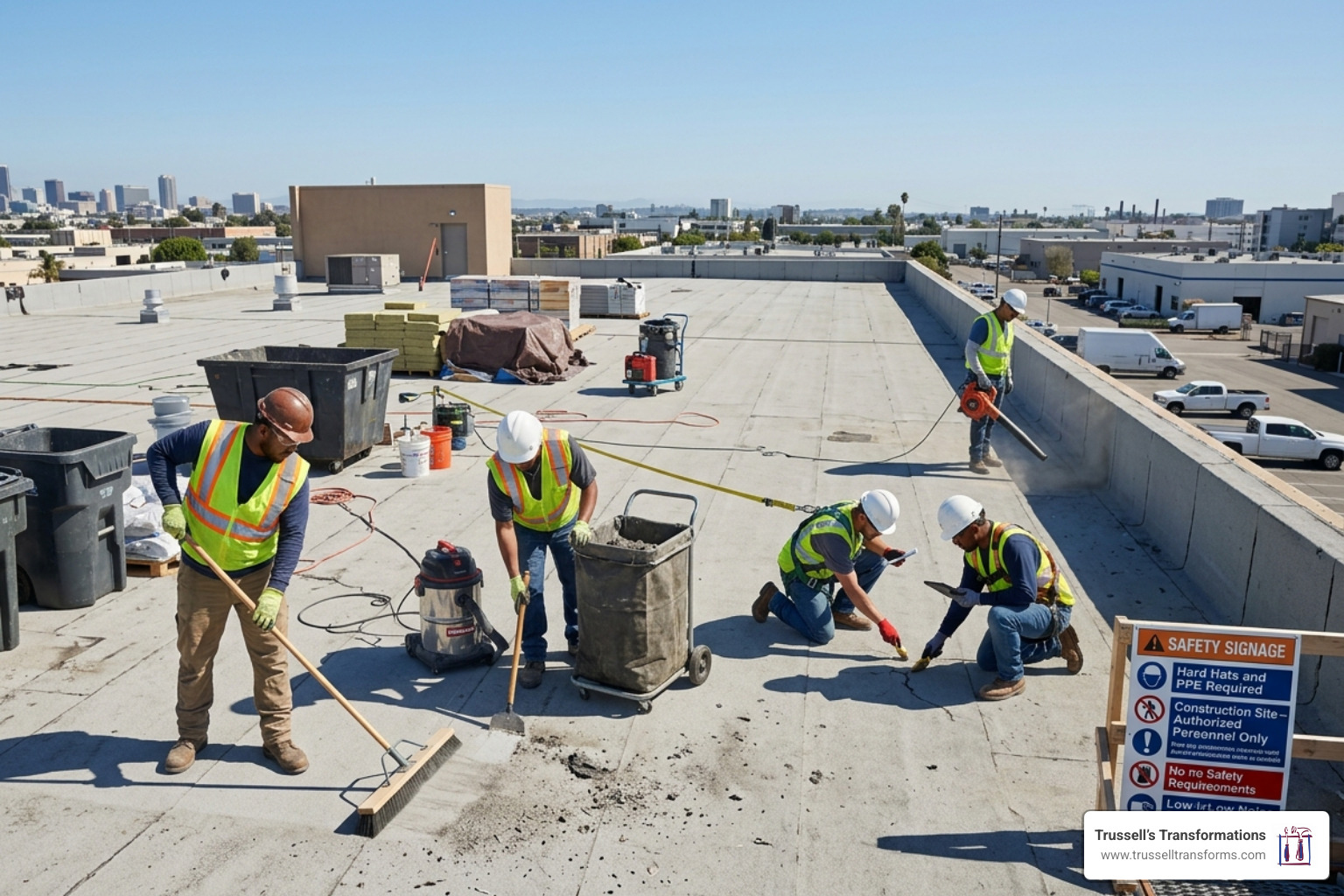
First, we conduct a thorough inspection of the roof deck. Whether it’s steel, wood, or concrete, the surface must be clean, dry, and structurally sound. We look for signs of rot, mold, or “soft spots” in the decking. Moisture detection is critical; trapping water beneath a new membrane is a recipe for premature failure and structural damage.
When choosing the best roofing material for your Albuquerque home, you must also consider the insulation. We typically use Polyiso (polyisocyanurate) boards because they offer the highest R-value per inch (about R-6.0).
Insulation Comparison Table
| Feature | Polyiso (ENRGY 3) | XPS (Extruded Polystyrene) | EPS (Expanded Polystyrene) |
|---|---|---|---|
| R-Value | High (6.0 per inch) | Moderate (5.0 per inch) | Lower (3.8 per inch) |
| Best Use | Standard TPO Installs | High moisture areas | Budget-friendly |
| Compatibility | Excellent with Adhesives | Requires separator | Requires separator |
We lay these boards in a staggered pattern to prevent “thermal bridging”—the loss of heat through continuous gaps. To protect the insulation from hail and foot traffic, we often install a cover board (like gypsum or high-density polyiso) on top. This creates a rigid, flat surface that enhances the seam strength during the welding process. For a professional, licensed contractor, this non-negotiable prep work is the difference between a 10-year roof and a 30-year roof.
Mastering the TPO Installation Process: Precision and Expertise
Once the foundation is set, the TPO roofing membrane installation begins in earnest. This is a game of millimeters and degrees.
First, we roll out the membrane and let it “relax” for at least 30 minutes. This allows the material to lose the tension from being tightly wound on a roll, preventing wrinkles and “fish mouths” later. We follow professional standards, such as those found in your guide to TPO membrane installation, ensuring the sheets are positioned perpendicular to the deck direction for maximum stability.
The heavy lifting is done by a robot welder. On the field of the roof, this machine travels at a consistent speed (usually 10 feet per minute) and a precise temperature (often around 900°F). These settings aren’t guesswork; we perform “test welds” on scrap material every morning and after every break to account for changes in the ambient Albuquerque temperature.
For tight corners and vertical flashings, we switch to hand welding. Using a silicone roller, we apply constant pressure behind the heat nozzle to ensure a void-free bond. Every single inch of the seam is then checked with a probe tool—a dull metal hook—to ensure there are no “cold welds” or skips.
Selecting the Best TPO Roofing Membrane Installation Method for Your Property
There isn’t a one-size-fits-all method for securing the membrane. We assess your building’s specific wind loads and structural capacity to choose the right path:
- Fully Adhered: The membrane is glued to the substrate using bonding adhesives. This is great for high-wind areas and provides a very clean, smooth look.
- Mechanically Fastened: The membrane is screwed into the deck using heavy-duty plates and fasteners. This is often the fastest and most cost-effective method.
- Induction Welding (RhinoBond): A specialized tool uses electromagnetic energy to weld the membrane to the plates beneath it without piercing the top layer.
- Self-Adhered (SA): Membranes like JM TPO-SA feature a “peel-and-stick” backing. These can be installed up to 3 times faster than traditional glue-down methods and are perfect for low-VOC requirements.
Final Inspection of the TPO Roofing Membrane Installation: Ensuring Lasting Performance
A job isn’t finished until it’s verified. Our final inspection is rigorous. We don’t just look for leaks; we look for the potential for leaks. We check the integrity of every flashing around pipes, drains, and skylights. We ensure termination bars are under constant compression with the proper sealant to prevent water from “creeping” behind the membrane at the walls.
Proper drainage is also vital. We verify that there is a positive slope (at least 1/4″:12) to prevent ponding water, which is defined as water that stays on the roof for more than 24 hours. Especially during the winter, holiday roof care involves ensuring these drains are clear of debris so that snowmelt doesn’t sit and freeze, stressing the seams.
Why Quality and Accountability Matter: The Trussell’s Transformations Advantage
When you choose a contractor for a TPO roofing membrane installation, you aren’t just buying material; you’re buying peace of mind. Hiring a licensed, insured, and experienced contractor like Trussell’s Transformations ensures that your project meets all local building codes and manufacturer warranty requirements.
We believe in accountability. If a problem arises, we are here to fix it. That’s the benefit of working with a local Albuquerque company with 25+ years of experience. We also understand that a major roof project is a big investment, which is why we offer 0% financing options to help you get the protection you need without the financial stress.
But our commitment to quality doesn’t stop at the roofline. As a one-stop shop for home transformations, we bring the same level of craftsmanship to your interior. Whether you are looking for a kitchen remodel or new roofing solutions, our showroom on Edith Blvd NE is filled with premium brands.
For your kitchen and bath, we carry:
- Cabinetry: Durasupreme Cabinetry, Waypoint Living Spaces, Sollid Cabinetry, and Kitchen Cabinet Distributors.
- Countertops: Caesarstone, Cambria, Silestone, and The Stone Collection.
Choosing a reputable company means you get a cohesive experience where the quality of your roof matches the beauty of your kitchen.
Frequently Asked Questions about TPO: Expert Answers
How long does a TPO roof last?
A well-installed TPO roof typically lasts between 20 and 30 years. However, this lifespan is heavily dependent on the quality of the initial installation and routine maintenance. Without professional seam welding and proper substrate preparation, a roof might fail in as little as 10 years. Annual inspections are the key to hitting that 30-year mark.
Can TPO be installed over an existing roof?
Yes, TPO is lightweight and ideal for “roof-over” or “recover” applications. However, this is only feasible if the existing roof is structurally sound and free of trapped moisture. A professional assessment is mandatory; if we find saturated insulation or rotted decking, a full tear-off is the only way to ensure a valid warranty and a safe building.
What is the difference between TPO and PVC?
Both are thermoplastic, heat-weldable, and reflective. However, TPO is generally more cost-effective and offers better resistance to punctures and tears. PVC is more resistant to certain chemicals and animal fats (making it popular for restaurants). For most commercial and residential flat roofs in New Mexico, TPO provides the best balance of performance and value.
Conclusion
Installing a TPO roof is a sophisticated engineering task that requires the right tools, the right materials, and the right team. By choosing Trussell’s Transformations, you are choosing expert craftsmanship that maximizes your energy savings and ensures long-term protection for your property.
Don’t leave your building’s future to chance with a “fly-by-night” installer. Experience the quality and accountability that comes with 25 years of local expertise. Schedule your professional roofing service today for unparalleled quality and peace of mind. Let us help you protect what matters most.
Recent Comments