

Your Ultimate Guide to Hiring a Tile Floor Installation Contractor
The Right Contractor for Tile Floor Installation Makes All the Difference
Hiring the right contractor for tile floor installation is one of the most important decisions you’ll make during a home renovation — and it’s easier to get wrong than most people expect.
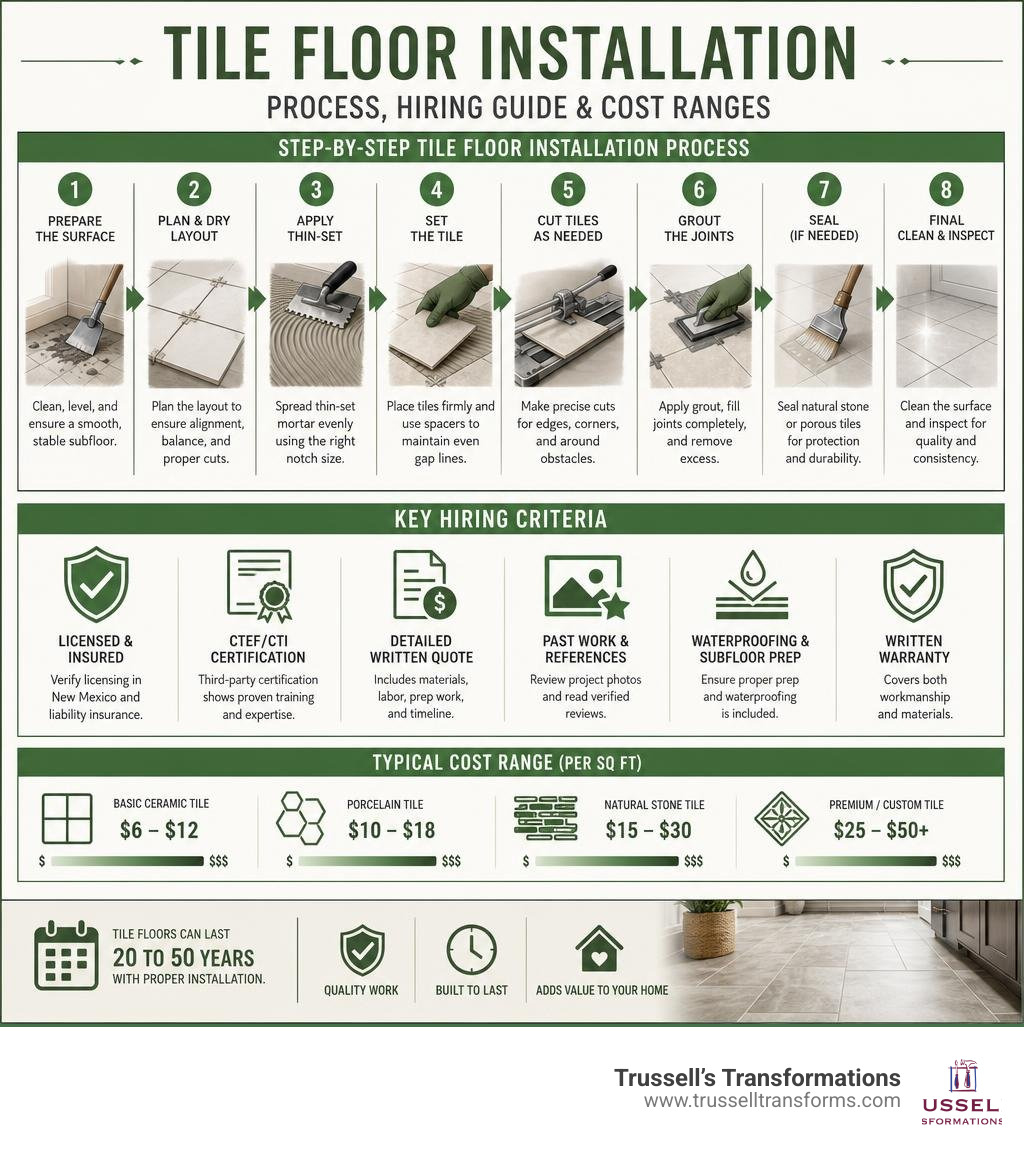
Here’s a quick overview of what to look for when hiring a tile floor installation contractor:
- Verify licensing and insurance — confirm they are licensed in New Mexico and carry liability insurance
- Check for CTEF/CTI certification — tile installation is an unregulated trade, so third-party certification matters
- Ask for a detailed written quote — including materials, labor, prep work, and timeline
- Review past work and references — look at photos of completed projects and read verified reviews
- Confirm waterproofing and subfloor prep is included — especially for bathrooms and wet areas
- Get a written warranty — covering both workmanship and materials
Tile floors are built to last 20 to 50 years when installed correctly. But that longevity depends almost entirely on who does the work — and how well they prepare the surface beneath your feet.
The challenge? Tile installation is an unregulated trade. As the Ceramic Tile Education Foundation (CTEF) puts it, there are “no requirements for formalized training” in this industry. That means virtually anyone can call themselves a tile installer, regardless of skill or experience.
For Albuquerque-area homeowners planning a kitchen or bathroom remodel, knowing how to find, vet, and hire a qualified tile contractor can save you thousands of dollars — and years of headaches.
This guide walks you through everything you need to know.
Why You Need a Licensed Contractor for Tile Floor Installation
It is a common misconception that laying tile is a straightforward weekend DIY project. While laying a single tile might seem simple, executing a flawless, flat, and durable floor across an entire room requires a high level of engineering and craftsmanship. Because tile installation is an unregulated trade with no federal requirements for formalized training, homeowners must be extra vigilant.
To separate the true craftsmen from the amateurs, look for installers who hold certifications from the Ceramic Tile Education Foundation (CTEF), such as the Certified Tile Installer (CTI) designation. A CTI certification is the only third-party assessment recognized by the tile industry, proving that the installer has mastered the technical standards and hands-on skills required for a lasting installation.
A certified professional understands that the secret to a perfect tile floor is actually what lies beneath it. Subfloor preparation is the most critical phase of the project. If a subfloor is uneven, bouncy, or retains moisture, even the most expensive porcelain tile will eventually tent, crack, or come loose. Professional installers evaluate the structural integrity of your subfloor, apply self-leveling underlayments where necessary, and install appropriate isolation membranes to prevent concrete slab movement from transferring to your beautiful new tile.
By insisting on high Professional tile installation standards, you protect your home investment. For more details on how we approach every phase of subfloor prep and installation, explore More info about flooring services.
Selecting the Right Tile Materials for Your Home
Choosing the perfect tile is about balancing aesthetics with the functional demands of your household. The three most common options are ceramic, porcelain, and natural stone. Each has unique characteristics that make it ideal for specific applications.
- Ceramic Tile: Generally more affordable and easier to cut, ceramic is a fantastic option for wall applications, backsplashes, and light-traffic residential floors. It offers a beautiful, classic finish for many areas of the home.
- Porcelain Tile: Baked at extremely high temperatures, porcelain is highly dense, incredibly durable, and nearly impervious to water. It is the gold standard for high-traffic entryways, kitchens, and bathrooms.
- Natural Stone: Materials like slate, marble, travertine, and granite offer unmatched luxury and unique organic patterns. They provide a premium, high-end aesthetic that elevates any room.
| Feature | Ceramic Tile | Porcelain Tile | Natural Stone |
|---|---|---|---|
| Durability | Moderate | Extremely High | High |
| Moisture Resistance | Moderate | Outstanding (Impervious) | Low to Moderate (Requires Sealing) |
| Best Used For | Walls, backsplashes, guest rooms | High-traffic floors, bathrooms, kitchens | Luxury spaces, fireplaces, accent areas |
| Maintenance | Low | Low | Moderate to High |
If you have pets, your material choice is even more critical. You will want a scratch-resistant, highly durable surface that can handle muddy paws and active households. Read our guide on Choosing the right flooring for pets to find a pet-friendly option that doesn’t sacrifice style.
Choosing a Contractor for Tile Floor Installation in Wet Areas
When it comes to wet areas like bathrooms, laundry rooms, and custom walk-in showers, tile installation becomes a matter of water management. Water is incredibly persistent; proper waterproofing systems ensure moisture is managed correctly beneath the tile.
A professional tile contractor does not rely on cement board alone to block water. They utilize advanced waterproofing systems, such as Schluter Systems membranes, which create a completely sealed, watertight envelope beneath the tile. In custom showers, they carefully construct pre-sloped shower pans to ensure water flows directly to the drain rather than pooling in the corners.
When interviewing a contractor for tile floor installation, always ask about their specific waterproofing protocols. Certified professionals will proudly explain their use of liquid-applied membranes or sheet membranes to protect your home. For a deeper look at industry-best practices, check out these Expert tile waterproofing techniques.
Finding a Local Contractor for Tile Floor Installation in New Mexico
If you live in Albuquerque, Rio Rancho, or surrounding Bernalillo County, finding a local contractor who understands our unique high-desert climate is essential. New Mexico’s dry air, intense summer heat, and freezing winter nights can cause concrete slabs to expand and contract more than in milder climates. This movement makes the use of proper crack-isolation membranes and flexible expansion joints absolutely vital.
Always verify that your local contractor is fully licensed, bonded, and insured in the state of New Mexico. In our state, major home remodeling and structural work require specific licensing (such as a GB-2 or GB-98 residential/general building license) to ensure safety and code compliance. Working with a licensed professional gives you peace of mind that your project is legally protected and built to last.
To learn more about local design trends and professional installation services in your specific neighborhood, explore our dedicated resources for Flooring options in Albuquerque and Flooring options in Rio Rancho.
The Importance of Planning: Why Paid Estimates and Design Renderings Save Money
It can be tempting to hire the contractor who offers a quick, free estimate over the phone. However, a high-quality home transformation requires careful planning. This is why we charge for our comprehensive in-home estimates and professional design consultations.

A paid estimate is much more than a price tag. It involves a thorough physical inspection of your subfloor, precise moisture testing, and the creation of detailed 3D design renderings. These renderings allow you to see exactly how your chosen tile patterns, cabinet layouts, and countertops will look together in your actual space before a single hammer is swung.
This upfront planning saves you significant money in the long run by:
- Eliminating Guesswork: You can visualize the layout and make design changes virtually, preventing costly mid-project modifications.
- Ensuring Budget Accuracy: A meticulous inspection means we uncover subfloor issues before writing the contract, eliminating unexpected “change orders” later.
- Perfecting Material Orders: Accurate 3D modeling ensures we order the exact amount of tile and trim needed, reducing waste.
Investing in professional planning ensures a smooth, stress-free remodeling experience. If you are still weighing your options, read our article on Deciding between hardwood and tile to help narrow down your vision.
Elevating Your Space: Coordinating Tile with Premium Cabinets and Countertops
A beautiful tile floor is the foundation of a stunning kitchen or bathroom, but it shouldn’t exist in a vacuum. To create a truly cohesive, high-end look, your flooring must seamlessly coordinate with your cabinetry and countertops.

At Trussell’s Transformations, we specialize in complete kitchen and bathroom remodeling, helping you coordinate every element of your space. We partner with industry-leading cabinetry brands to offer custom and semi-custom options that fit any style:
- Durasupreme Cabinetry and Waypoint Living Spaces for timeless elegance and exceptional storage engineering.
- Sollid Cabinetry and Kitchen Cabinet Distributors for modern, durable designs built for active households.
To top off your cabinets, we offer premium countertop options from trusted brands like Caesarstone, Cambria, Silestone, and The Stone Collection.
When selecting countertops, many homeowners wonder about the differences between quartz and granite:
- Quartz Countertops: Engineered from natural quartz crystals and resin, quartz is non-porous, stain-resistant, and never requires sealing. It offers incredible color consistency and modern appeal.
- Granite Countertops: A 100% natural stone, granite offers unique, one-of-a-kind veining and excellent heat resistance, though it does require periodic sealing.
- Why Avoid Laminate? While laminate countertops are budget-friendly, they lack the durability, heat resistance, and long-term resale value of quartz or granite. Laminate is prone to peeling and cannot support under-mount sinks, making premium stone countertops a far wiser investment for a lasting remodel.
Frequently Asked Questions About Tile Installation
How long does a typical tile floor installation take?
For an average-sized room (about 150 to 250 square feet), a professional tile floor installation typically takes 3 to 5 days. The process cannot be rushed, as it requires step-by-step precision:
- Day 1: Subfloor preparation, leveling, and layout planning.
- Day 2: Laying the tile and setting the thinset mortar.
- Day 3: Allowing the mortar to cure completely (typically 24 hours).
- Day 4: Applying the grout and cleaning the tile faces.
- Day 5: Sealing the grout lines (if using cementitious grout) and installing transition trim.
What is the average cost of tile floor installation?
The average cost of professional tile floor installation typically ranges from $5 to $15 per square foot for standard ceramic or porcelain tile. This cost is calculated based on three primary factors:
- Materials: Standard ceramic is the most economical, while large-format porcelain or natural stone increases material costs.
- Labor and Complexity: Intricate patterns (like herringbone or chevron) and large-format tiles require specialized tools and more time, which increases labor rates.
- Subfloor Prep: If your concrete slab requires extensive leveling or a crack-isolation membrane, this will be factored into the initial estimate.
What warranties should be included with professional tile installation?
When hiring a professional, your project should always be backed by two distinct warranties:
- Manufacturer Warranty: This covers defects in the tile materials themselves.
- Workmanship Guarantee: This is provided by your contractor and covers the actual installation work. A reputable contractor should offer at least a 1- to 2-year written workmanship warranty, ensuring that if any issues arise from the installation process, they will return to resolve them. Always ensure these warranty details are explicitly written into your final project contract.
Conclusion
Investing in a new tile floor is an excellent way to elevate your home’s style, durability, and overall value. However, the success of your project relies entirely on the skill, preparation, and precision of your installer.
At Trussell’s Transformations, we bring over 25 years of experience to every home renovation in Albuquerque, Rio Rancho, and Bernalillo County. We are a true one-stop shop, offering premium materials, professional design renderings, and expert installation by licensed, insured contractors. Plus, we offer flexible 0% financing options to help bring your dream space to life on a budget that works for you.
Ready to take the first step toward a beautiful home? Check out our work on our Trussell’s Transformations Houzz Profile to find design inspiration, or visit our showroom to explore our premium tile, cabinet, and countertop collections.
Schedule a Flooring Consultation with our team today, and let’s build something beautiful together!
Recent Comments